
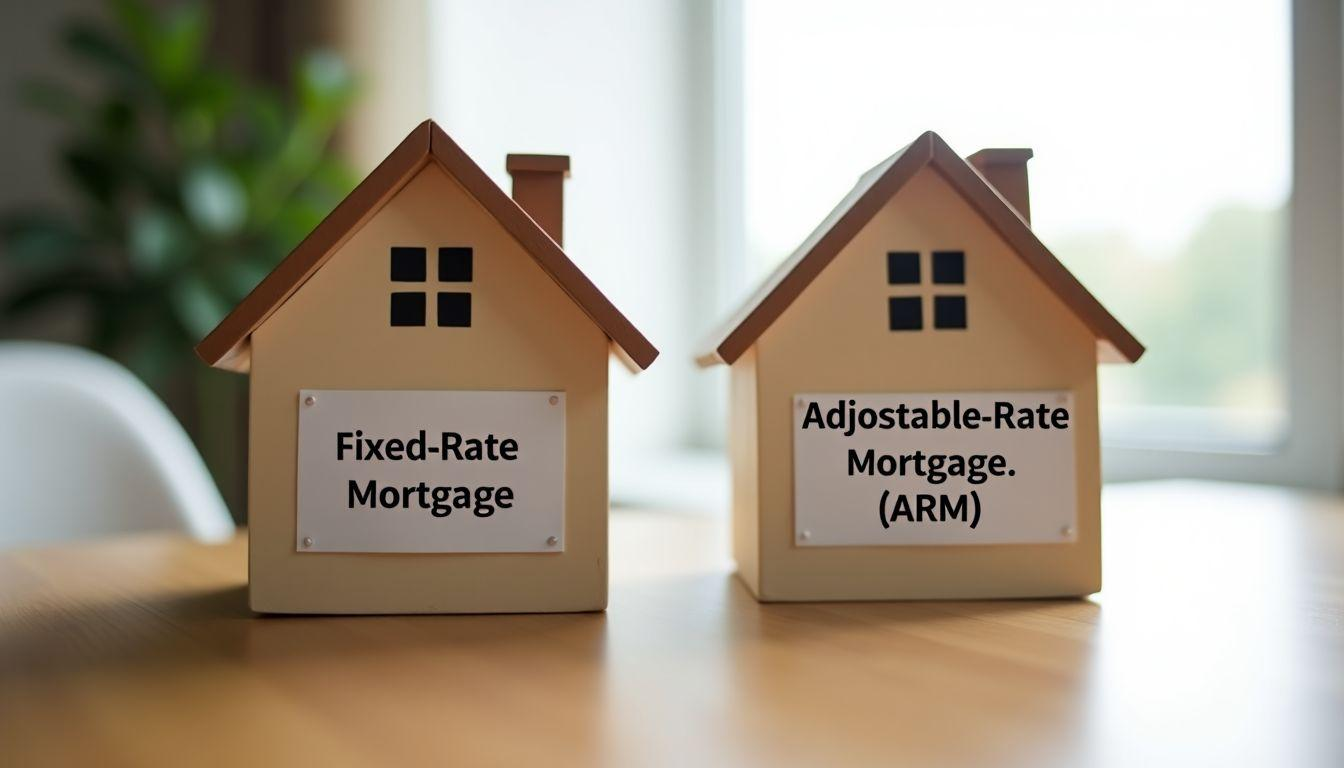
Buying a home is one of the biggest financial decisions many people make, and choosing the right mortgage can have a lasting impact on their finances. With different types of mortgage loans available, understanding how each option works can help you make a more informed decision. Two common choices are fixed-rate mortgages and adjustable-rate mortgages (ARMs).
When comparing a fixed vs adjustable rate mortgage, the most important factors to consider include your financial situation, how long you plan to stay in the home, your comfort with changing monthly payments, and current mortgage rates. Both options have advantages and potential drawbacks, so the right choice depends on your goals and circumstances.
What Is a Fixed-Rate Mortgage?
A fixed-rate mortgage is a home loan with an interest rate that remains the same throughout the loan term. This means your principal and interest payment generally stays consistent, making it easier to plan your monthly housing expenses.
Fixed-rate mortgages are commonly available with terms such as 15, 20, and 30 years. A 30-year mortgage may offer lower monthly principal and interest payments compared with a shorter loan term, while a 15-year mortgage generally allows borrowers to pay off their homes faster and may come with a lower interest rate.
One of the main advantages of a fixed-rate mortgage is predictability. Since the interest rate does not change, borrowers are protected from increases in market interest rates during the loan term. This can make long-term budgeting easier, especially for people who prefer consistent payments.
However, fixed-rate mortgages may initially have higher interest rates than some adjustable-rate mortgage options. Borrowers who sell or refinance their homes after only a few years may not benefit fully from the long-term payment stability.
If you are exploring home financing, review CTB Connect’s mortgage solutions to learn about available home loan programs.
What Is an Adjustable-Rate Mortgage?
An adjustable-rate mortgage, commonly known as an ARM mortgage, is a home loan with an interest rate that can change over time. Unlike a fixed-rate mortgage, an ARM typically begins with an introductory period during which the interest rate remains unchanged. After that period, the rate adjusts at scheduled intervals based on a financial index and the lender’s margin.
For example, a 5/1 ARM has an initial fixed interest rate for five years, followed by adjustments that generally occur once per year. Other common structures include 7/1 and 10/1 ARMs. The actual terms depend on the loan agreement.
Understanding how does an adjustable rate mortgage work is important before choosing this option. Once the introductory period ends, your interest rate and monthly principal and interest payment may increase or decrease depending on market conditions and the loan’s adjustment terms.
Most ARMs include rate caps that limit how much the interest rate can change at the first adjustment, at subsequent adjustments, and over the life of the loan. These limits can help borrowers understand their potential payment exposure, but they do not eliminate the risk of higher payments.
Before choosing a mortgage, it is helpful to understand the different home loan options available through CTB Connect.
Fixed-Rate vs. Adjustable-Rate Mortgage: Key Differences
Both mortgage options can help you finance a home, but they differ in how interest rates and monthly payments are structured. Understanding these differences can help you decide which loan better supports your financial goals.
| Feature | Fixed-Rate Mortgage | Adjustable-Rate Mortgage |
|---|---|---|
| Interest rate | Remains the same throughout the loan term | Changes after the initial fixed period |
| Monthly principal and interest | Generally predictable | May increase or decrease after adjustments |
| Initial interest rate | May be higher than an introductory ARM rate | May start lower than a comparable fixed-rate loan |
| Budget planning | Easier to plan long-term | Requires preparation for possible payment changes |
| Market interest rate changes | Borrower is protected from future rate increases | Payments may be affected by market changes |
| Suitable for | Buyers who prefer long-term payment stability | Buyers comfortable with potential rate changes |
When comparing fixed rate vs adjustable rate mortgage pros and cons, remember that the lowest initial interest rate does not necessarily mean the lowest overall borrowing cost. Consider the full loan term, possible rate adjustments, fees, and how long you expect to keep the mortgage.
You can also use CTB Connect’s Comparing Mortgage Terms Calculator to explore how different mortgage terms may affect your payments.
Advantages of a Fixed-Rate Mortgage
A fixed-rate mortgage can be a suitable option for buyers who prioritize stability and want predictable monthly payments. Since the interest rate remains unchanged, borrowers do not have to worry about rising market rates increasing their scheduled principal and interest payments.
Another advantage is easier long-term financial planning. Homeowners can estimate their mortgage payments over the life of the loan and build a household budget around a consistent amount. This can be particularly helpful for families managing other financial commitments, such as education expenses, savings goals, and retirement planning.
Fixed-rate mortgages may also be beneficial for buyers who plan to stay in their homes for many years. Over time, having a consistent interest rate can provide greater certainty, even when broader mortgage rates fluctuate.
For additional guidance on preparing for homeownership, explore CTB Connect’s financial education and homeownership resources.
Advantages of an Adjustable-Rate Mortgage
An adjustable-rate mortgage may appeal to buyers who want a lower initial interest rate or expect to move, sell, or refinance before the introductory period ends. Depending on market conditions and loan terms, the initial payment may be lower than that of a comparable fixed-rate mortgage.
Another potential advantage is that an ARM’s interest rate may decrease during an adjustment period if the underlying index declines and the loan’s terms allow the change. This could reduce the borrower’s monthly principal and interest payment.
However, an adjustable-rate mortgage requires careful planning. Buyers should consider whether they could afford higher payments if interest rates increase. It is also important to understand the introductory period, adjustment frequency, index, margin, and applicable rate caps before accepting the loan.
Which Is Better: Fixed or Adjustable-Rate Mortgage?
There is no single answer to which is better fixed or adjustable rate mortgage because the right option depends on your financial circumstances and future plans.
A fixed-rate mortgage may be a better fit if you plan to stay in your home for an extended period, prefer predictable payments, or want protection from future interest rate increases. It can make budgeting more straightforward because your principal and interest payment generally remains consistent.
An adjustable-rate mortgage may be worth considering if you expect to move or refinance before the introductory period ends, have enough financial flexibility to handle potential payment increases, and understand the risks associated with changing interest rates.
Before making a decision, think about your expected time in the home, income stability, available savings, and ability to manage higher monthly payments. Comparing loan estimates from multiple lenders can also help you understand the total cost of each option.
If you are evaluating your borrowing options, visit CTB Connect’s mortgage lending page to learn more about its home financing programs.
When Should You Choose an Adjustable-Rate Mortgage?
An adjustable-rate mortgage may be suitable in certain situations, particularly when a buyer has a clear understanding of their expected homeownership timeline and can manage potential payment changes.
For example, someone who expects to relocate for work within five to seven years may consider an ARM with an introductory period that aligns with their expected timeline. However, future plans can change, and selling or refinancing is never guaranteed. Home values, market conditions, and personal circumstances may affect those decisions.
If you are considering an ARM, review the maximum possible interest rate and payment under the loan terms. Ask your lender for examples showing how your monthly payment could change after the introductory period. Understanding these scenarios can help you decide whether the potential savings are worth the added uncertainty.
Factors to Consider Before Choosing a Mortgage
Choosing between fixed and adjustable mortgage rates involves more than comparing the initial interest rates. Your overall financial position and future plans should guide your decision.
Consider the following factors before selecting a mortgage:
- How long you plan to stay: Your expected time in the home can influence whether an introductory ARM rate may be beneficial.
- Monthly budget: Consider whether you can comfortably manage your payment if interest rates increase.
- Income stability: A predictable income may make it easier to plan for long-term mortgage obligations.
- Emergency savings: Maintaining savings can help you handle unexpected expenses or higher mortgage payments.
- Loan terms and rate caps: Review the ARM’s adjustment schedule, index, margin, and maximum interest rate.
- Total borrowing costs: Compare interest rates, closing costs, lender fees, and other expenses rather than focusing only on the initial payment.
Taking time to evaluate these factors can help you choose a mortgage that supports both your homeownership goals and long-term financial well-being. You can also explore CTB Connect’s online financial tools and calculators to support your financial planning.