
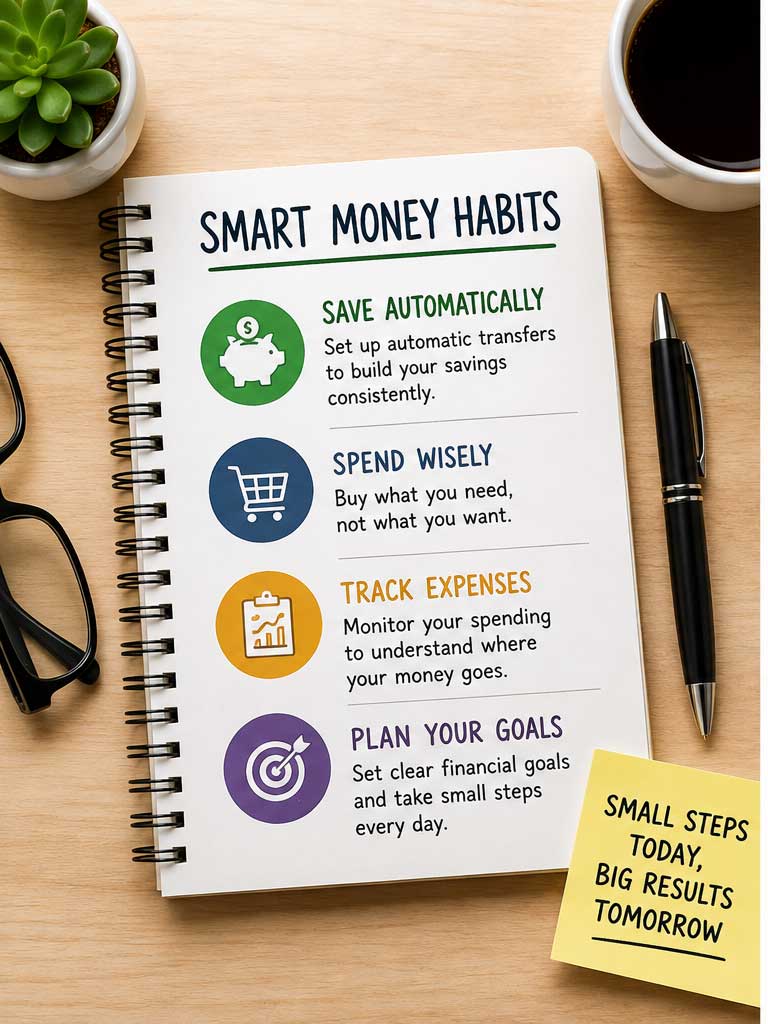
Understanding How Small Financial Changes Add Up
Small financial decisions may seem insignificant individually, but their impact can become substantial when repeated consistently. For example, saving $10 a week may not feel like a major achievement. However, continuing that habit for a year results in more than $500 in savings. Increasing the amount gradually can create even greater results without requiring a dramatic change to your lifestyle. The same principle applies to spending. Reducing unnecessary subscriptions, limiting impulse purchases, or finding less expensive alternatives can free up money that can be redirected toward savings or financial goals. The goal is not perfection. Instead, it is about developing simple financial habits for long-term financial success that you can maintain month after month.Saving Money Tips That Can Make a Difference
One of the easiest ways to improve your finances is to identify small expenses that occur regularly. These expenses may not seem significant, but they can add up considerably over a year.
Review Your Recurring Expenses
Start by reviewing subscriptions, memberships, service fees, and other recurring expenses. Ask yourself whether you are actively using each service. Canceling even one or two subscriptions can create additional room in your monthly budget.- Streaming subscriptions
- Gym memberships
- Mobile phone plans
- App subscriptions
- Delivery memberships
- Unused financial services
- Recurring online purchases
Reduce Impulse Purchases
Impulse spending can make it difficult to understand where your money is going. A simple strategy is to pause before making nonessential purchases. Try waiting 24 hours before buying something you did not originally plan to purchase. This gives you time to decide whether the item is genuinely necessary. Small changes in purchasing behavior can become valuable money management tips when practiced consistently.Save Before You Spend
Instead of saving whatever remains at the end of the month, consider setting aside money when you receive your paycheck. Even a small automatic transfer can help make saving part of your routine. Over time, increasing the amount as your income changes can strengthen the habit.Simple Ways to Improve Your Finances Every Month
Improving your finances does not have to involve complicated strategies. A few straightforward changes can make managing money easier and more consistent.| Small Financial Change | Potential Benefit |
|---|---|
| Automate a small savings transfer | Builds consistent savings |
| Review subscriptions | Reduces recurring expenses |
| Plan weekly spending | Limits unnecessary purchases |
| Compare prices before buying | Helps reduce costs |
| Cook at home more often | Can lower food expenses |
| Review financial goals monthly | Keeps progress visible |
| Use a spending limit for nonessentials | Helps control discretionary spending |
Create a Weekly Spending Check-In
You do not need to spend hours analyzing every transaction. A short weekly review can help you understand your spending patterns. Look at:- What you spent
- What you saved
- Which purchases were necessary
- Where you spent more than expected
- What you could change the following week
Set Small, Specific Savings Goals
A broad goal such as “save more money” can be difficult to measure. Instead, choose a specific target. For example:- Save $25 each week
- Build a $500 emergency cushion
- Save for an upcoming purchase
- Increase monthly savings by $10
- Reduce dining-out expenses by $50 per month
How to Build Better Financial Habits
Learning how to build better financial habits starts with making money management easier to repeat. Rather than trying to change everything at once, choose one habit and practice it consistently. Once it becomes part of your routine, introduce another small improvement.Automate Your Savings
Automation removes some of the decision-making involved in saving. You can schedule an automatic transfer from your checking account to a savings account after receiving your paycheck. Even if the amount is small, consistency can help establish a dependable savings routine.Track Your Spending
Tracking your spending can reveal patterns that may otherwise go unnoticed. You may discover that several small purchases each week are consuming more money than expected. Once you identify these patterns, you can decide which expenses to reduce. Tracking also helps you understand whether your spending aligns with your priorities.Use the “Small First” Approach
If saving a large amount feels difficult, start with a smaller amount. For example, saving $5 or $10 regularly may be easier than trying to immediately set aside hundreds of dollars. Once the habit becomes comfortable, you can gradually increase the amount. This approach makes saving feel more achievable while helping establish long-term consistency.Small Money Habits That Make a Big Difference
Some of the most effective financial changes are simple enough to incorporate into everyday life. Consider these small money habits that make a big difference:- Make a shopping list before going to the store.
- Compare prices before making larger purchases.
- Use existing groceries before buying more.
- Reduce unnecessary convenience purchases.
- Review your bank statements regularly.
- Set automatic savings transfers.
- Avoid unnecessary late fees.
- Give yourself a limit for discretionary spending.
- Reuse or repair items when practical.
- Put unexpected extra money toward a financial goal.
How Small Savings Add Up Over Time
Understanding how small savings add up over time can make saving feel more motivating. Consider a person who saves $20 each week. Without considering interest or investment growth, that habit would result in approximately:| Savings Habit | Approximate Annual Savings |
|---|---|
| $5 per week | $260 |
| $10 per week | $520 |
| $20 per week | $1,040 |
| $25 per week | $1,300 |
| $50 per week | $2,600 |
Personal Finance Tips for Long-Term Financial Wellness
Saving is only one part of maintaining healthy finances. Strong financial wellness also involves understanding your spending, managing debt, preparing for unexpected expenses, and setting realistic goals. Some practical personal finance tips include:Build an Emergency Fund
An emergency fund can provide a financial cushion when unexpected expenses occur. Start with a small target if necessary and gradually build your savings over time.Prioritize High-Interest Debt
If you have high-interest debt, consider directing additional money toward reducing those balances while maintaining appropriate savings. Lowering interest costs can help free up money for future financial goals.Review Your Financial Goals
Your financial priorities can change as your income, expenses, and life circumstances change. Review your goals periodically and adjust your savings strategy when necessary.Give Every Dollar a Purpose
You do not necessarily need a complicated budgeting system. Simply understanding where your money is going can make it easier to prioritize essential expenses, savings, and discretionary spending.Simple Financial Habits for Long-Term Financial Success
Developing simple financial habits for long-term financial success is less about making perfect decisions and more about creating routines that support your goals. A useful approach is to focus on three areas: Spend intentionally: Know what you are purchasing and whether it supports your priorities. Save consistently: Even small amounts can help create a savings habit. Review regularly: Check your progress and make adjustments when your circumstances change. Over time, these habits can become automatic. What initially requires conscious effort can eventually become a normal part of your financial routine.Making Small Changes Without Feeling Deprived
Saving money does not mean eliminating every enjoyable expense. Extremely restrictive budgets can be difficult to maintain and may eventually lead to frustration. Instead, focus on reducing expenses that provide little value while continuing to spend on things that genuinely matter to you. For example, you might choose to:- Keep one entertainment subscription instead of several.
- Eat out less frequently rather than eliminating restaurants completely.
- Wait for sales before making nonessential purchases.
- Choose affordable alternatives for routine expenses.
- Set aside a specific amount for fun and discretionary spending.